
How to price sauna sessions
Your prices decide who books, when they come and how full your sauna is. Here is how to price shared seats, private bookings and quiet hours, and keep prices simple for guests.
Start with a price per seat
Shared sessions are usually sold by the seat. Start from what one session costs you to run: heating, cleaning, rent, and staff if you have them. Then look at how many seats you usually fill, not how many the sauna holds. A price that covers your costs at a realistic number of guests leaves room for quiet days.
Decide how long a session is, and how much time you need between sessions to clean and reheat. A 90-minute session every 120 minutes leaves 30 minutes in between.
Price private bookings for the whole sauna
A private booking takes the whole sauna, so price it for the seats it blocks, not per person. Groups, birthdays and work teams book this way.
In Periode, a private booking blocks the shared seats and the other way round, so the same time is never sold twice.
Charge less when it is quiet
If your evenings and weekends fill up while weekday mornings have empty seats, let the price follow. A lower price at quiet times brings in guests who can come then, and busy times can cost a little more.
Each price can change at the times of the week you choose, so a seat costs less on a weekday morning and more on a Friday evening.
Show every price up front
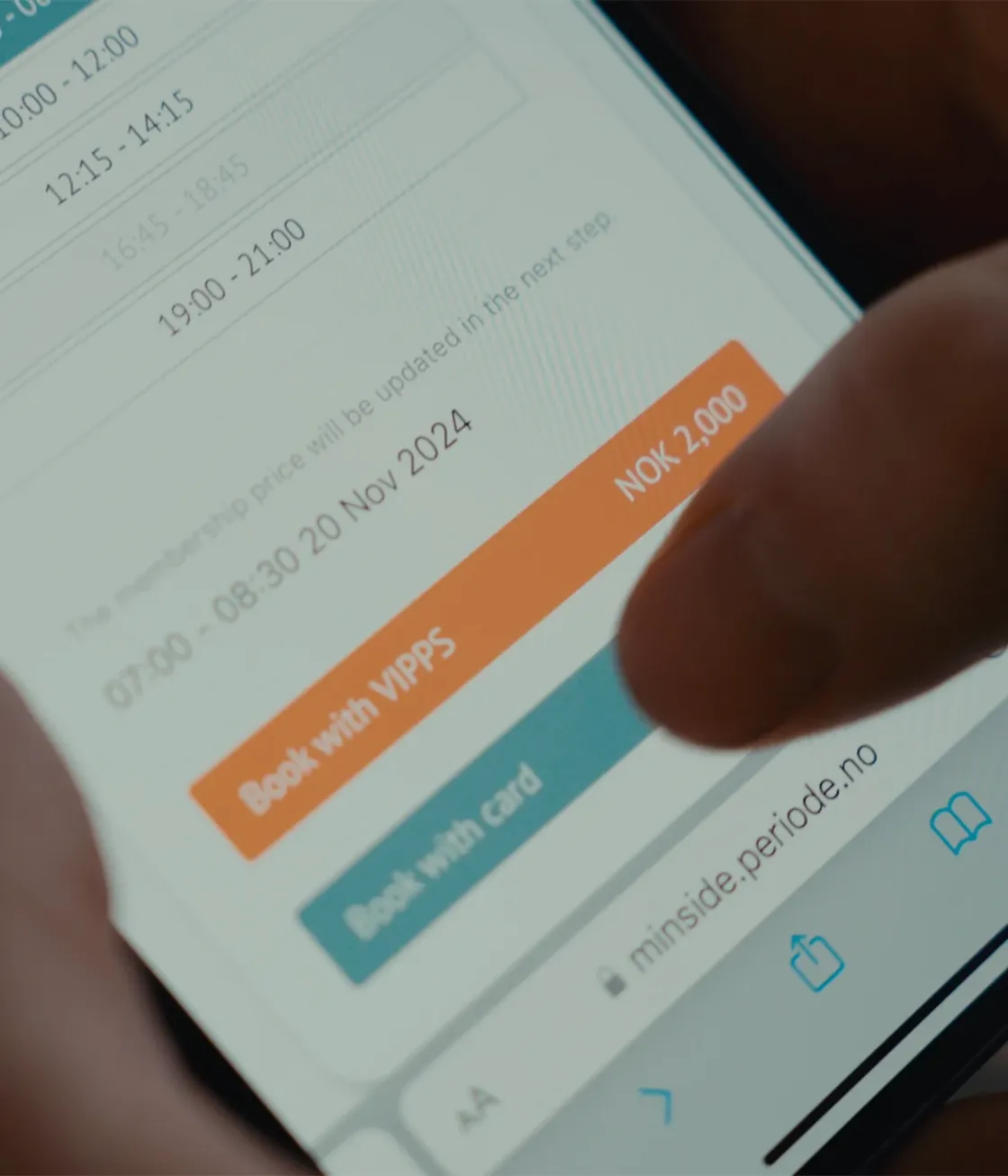
Guests like to know the price before they pick a time. Adult, student, senior, child and member prices can go in one booking, and you can show the price in the list of times, so guests see it before they choose a session.
Longer sessions and extras
Some guests want more time. Offer a session in more than one length, with a price for each length, and cap what one booking can cost.
Extras let guests spend more without raising the seat price. Guests can add towels, drinks or fire-lighting to their booking, and an extra can be set so it can only be booked together with a session.
Discount codes with limits
Discount codes work well for partners, launches and quiet weeks, but an open code spreads fast. Set the dates a code works, how many times it can be used, one use per guest and a minimum number of people.
Punch passes, memberships and gift cards
Three ways to get paid before the visit:
- Punch passes. Sell passes such as 5 or 10 visits, each with its own expiry. Busy times can use more visits than quiet ones.
- Memberships. A monthly or yearly price, with member prices and booking limits, so members come often without taking every seat at busy times.
- Gift cards. Add bonus value, so a buyer who pays 1,000 gets 1,100 to spend.
Decide what happens when guests cancel
A clear cancellation rule protects your income and is fair to guests. Set how late guests can cancel, and whether they get money back, gift card credit or part of the amount.
When a session is full, guests can join the waiting list and get an email when a seat frees up, so a late cancellation can still be filled.
Start simple, then adjust your prices
You do not need every option on day one. Start with one seat price, a price for private bookings and a clear cancellation rule. After a few weeks, look at which sessions fill and which do not, and adjust from there: a lower price at quiet times, a punch pass for regulars, or extras for guests who want more.